
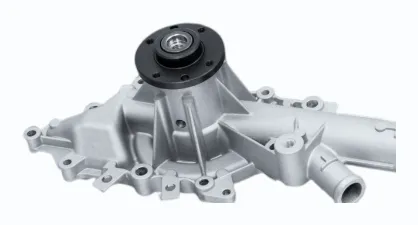
The water pump circulates the coolant. Driven by the timing belt, the auxiliary belt or, on some engines, a chain, its impeller pushes the coolant from the bottom of the radiator through the block and the head, where it picks up the heat of combustion, and back to the radiator and the heater. A bearing carries the shaft, and a seal between the bearing and the impeller keeps the coolant away from the bearing. The impeller is metal or plastic; the housing is aluminium and bolts to the block or the timing case.
Pumps fail at the seal and the bearing. The seal wears and weeps, first a few drops from the weep hole that dry to a crust, then a leak; coolant that gets past the seal washes the grease out of the bearing, which whines, rumbles and eventually seizes or lets the pulley wobble. A plastic impeller can lose its blades or come loose on the shaft, and a corroded metal impeller moves less coolant, so the engine runs hot in traffic although nothing leaks.
MONTTRON water pumps are made to OEM-compliant quality and as aftermarket spare parts: the impeller, the bearing, the seal, the flange and the drive of the original, so the pump fits the original housing and belt and moves the coolant at the original rate. The materials are tested for durability and temperature resistance.
The range covers European and Japanese passenger cars. Each reference is identified by the OE number of the original part; send that number and the vehicle identification number (VIN) and we confirm the matching MONTTRON reference.
For availability and OE cross-references, contact us by email.